Driven by the community
The water committee started this work and has the backing of the wider community. It is a local plan, not a solution brought in from outside.
Independent Green Projects
We help communities turn green ideas into practical solutions and lasting improvements to everyday life.
We are starting with solar-powered water pumping and distribution in Kitheuni, Kenya. Our purpose reaches further: supporting sustainable development that is rooted in the communities it serves.
Explore our first project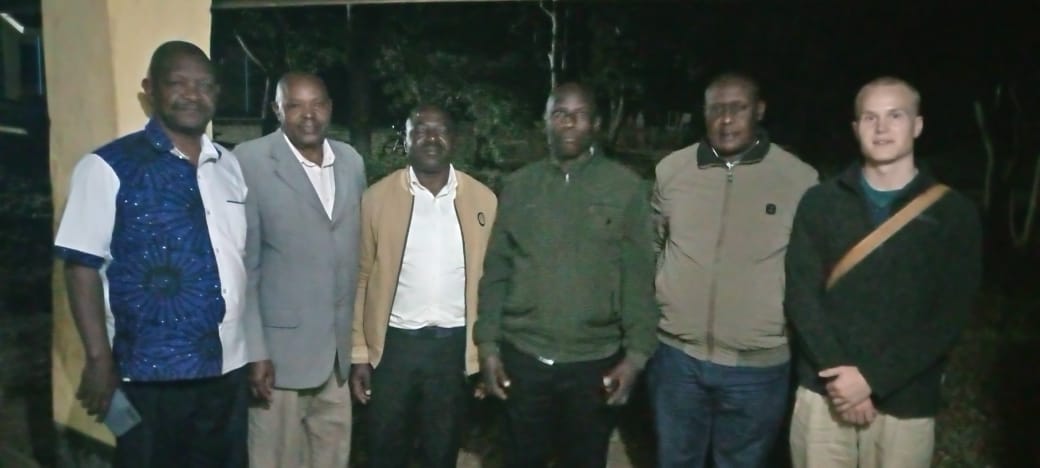
Our purpose
Independent Green Projects is a nonprofit initiative supporting green and sustainable development on the African continent, with a current focus on Kenya and Malawi.
We bring together local knowledge, technical experience and funding to help communities replace costly fossil based electricity generation systems with green solutions they can afford, operate and maintain. Kitheuni is our first project, and the starting point for this work.
Our first project / Kenya
Kitheuni · Machakos County
Kitheuni is a rural village of around 1,000 people in Machakos County, Kenya. It already has a water system with a borehole, a pump and pipes reaching the local market and around 40 homes. What it lacks is an affordable way to power it.
The current pump runs on a diesel generator that the village can no longer afford to operate and maintain. Together with the local water committee, we want to replace diesel with solar power and set up a community-owned water company that sells water to pay for the running costs of the system.
The community started this project before we became involved. Our role is to help secure the funding and technical support to make it happen.
Kitheuni / Background
Without the borehole pump, households in Kitheuni rely on the water they can collect themselves. Rainwater tanks fill during the rainy seasons, which together last no more than about five months of the year. By August, three months into the long dry season, most households and the village dispensary risk running out.
The alternatives are hard. River water has to be fetched and carried home by hand. A private seller offers water from a shallow well, but it is salty and almost dries up in the dry season. The community would rather have a shared, reliable supply of its own than depend on a private source.
The infrastructure for that supply already exists. In 2009, the Red Cross installed a diesel generator and pump at the borehole, feeding a selling point at the market. Around 40 households have since paid for their own connections. But fuel and repairs now cost more than the village can afford, so the system cannot be kept running.
Our grandmother helps start the Kitheuni dispensary, works there as a nurse, and establishes the borehole with the village’s first water pump.
The Red Cross installs a new diesel-powered pump at the borehole, and the community builds a pipe network to the local market.
Diesel and maintenance costs become too high for the village. Residents fall back on rainwater, the river and the salty private well.
Jeppe visits Kitheuni to renew the family connection. The head teacher explains the problem and shares the community’s vision to switch to solar power.
Together with the committee and a Kenyan water and energy contractor, we are firming up costs through site surveys and equipment quotations.
Kitheuni / Why this project
The water committee started this work and has the backing of the wider community. It is a local plan, not a solution brought in from outside.
The borehole, pipes, selling point and household connections are in place. The main work is installing solar equipment and servicing or replacing the pump, which keeps the project technically simple.
Water will be sold at around the price residents have paid before. Early estimates show sales covering operation and maintenance from day one, with a modest surplus set aside for repairs and future expansion.
Kitheuni / The plan
Solar panels, a pump controller, mounting and fencing replace the diesel generator. The existing pump will be serviced or replaced.
An additional tank stores water pumped while the sun is up, so supply continues in the evening and overnight.
Renovated pipes and new water meters reduce leaks and improve water management.
Kitheuni Water Company, run with the water committee, sells the water, funds maintenance and creates 2–4 part-time local jobs.
Kitheuni / Water access
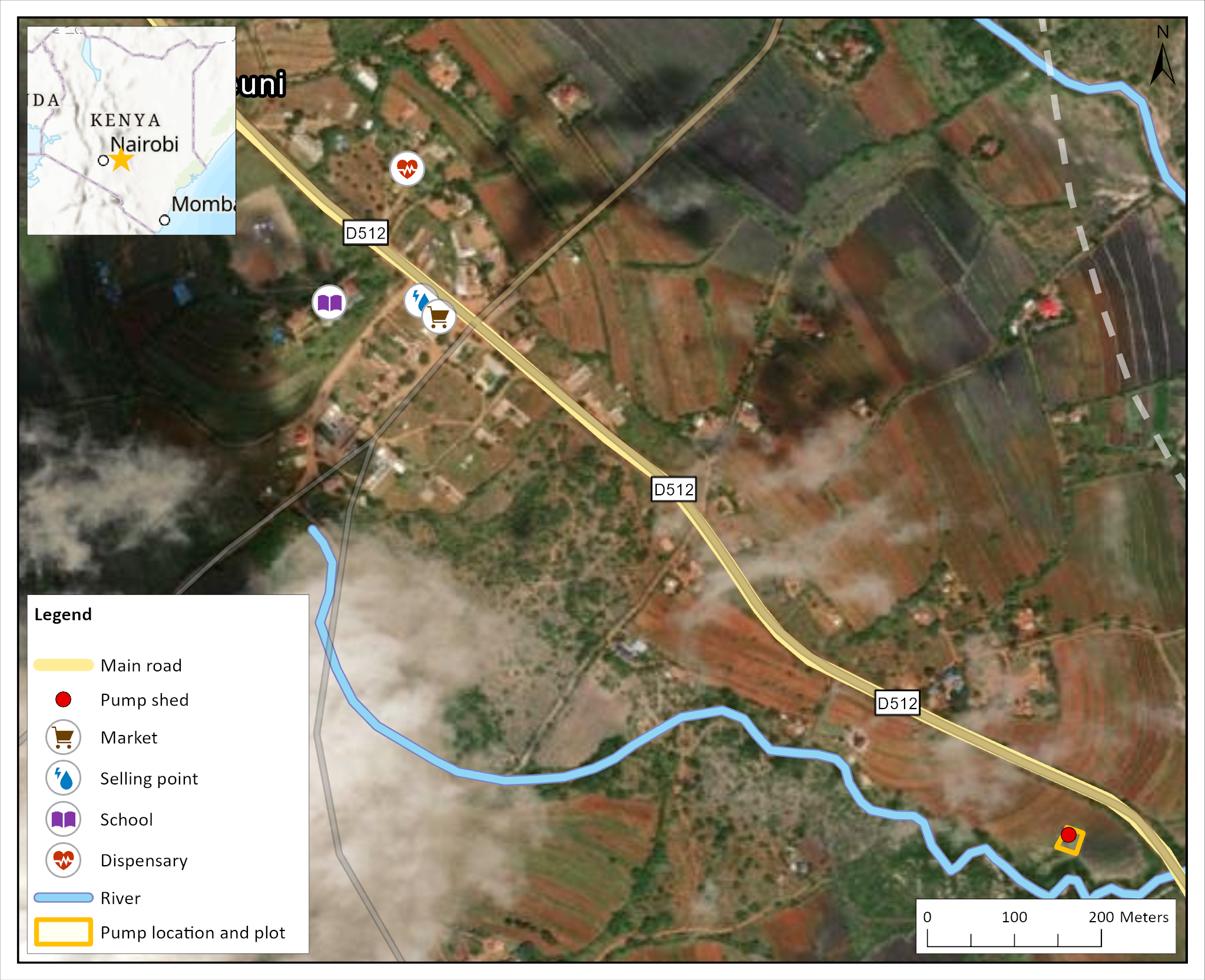
The borehole sits apart from the village's market, school and dispensary. Restoring the water system would bring its supply back to the places where residents collect and use water.
Kitheuni / Looking ahead
A steady supply gives back the hours now spent fetching water and helps the school and dispensary keep going through the dry season.
Once the first phase is running, savings from water sales could fund a second phase: extending the network to more residents and to local farmers, whose harvests today depend heavily on the rains.
How we work
We support needs identified by the people who will use and manage the solution.
Running costs, maintenance and local responsibility are part of the project from the beginning.
In Kitheuni, we are seeking support for solar equipment, installation and improvements to the existing water system.
The people behind INGP
Started by Lasse Hvid Schmidt and Jeppe Baarup Aaby, supported by a small team and working with the people of Kitheuni.
Our connection to Kitheuni is a family one, going back to our grandmother’s work at the village dispensary. Today we bring that connection together with practical skills in engineering, coordination and fundraising.
Engineering and renewable energy project experience.
Communication and coordination with local stakeholders.
Organizational development and fundraising.
Engineering and renewable energy project experience.
The committee brings together local knowledge and representatives of the school, dispensary and wider community.
Get involved
Interested in supporting Kitheuni or discussing our work?
Get in touch to talk about funding, technical support or collaboration.
Kitheuni / Technical overview
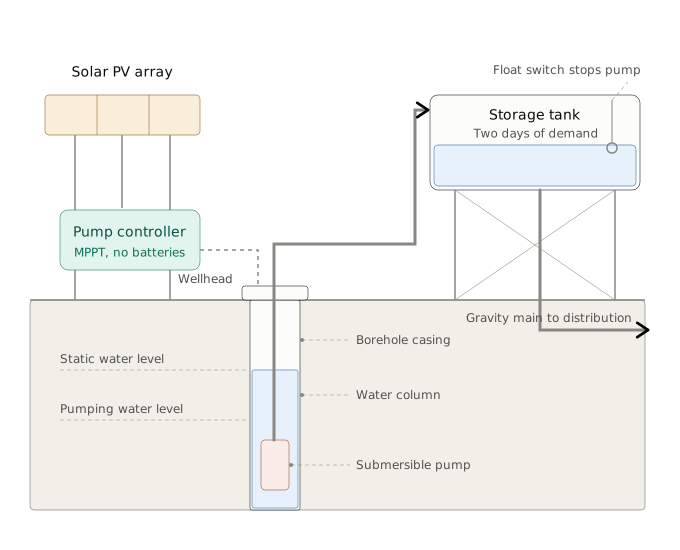
Solar power would drive the borehole pump, lifting water into an elevated storage tank. From there, water would flow through the pipe network to community selling points and household connections.
The existing network connects the borehole to a selling point at the market and around 40 private household outlets. Restoring supply would allow residents to buy water at the community selling point, while connected homes could receive it directly. Additional selling points are being considered to improve access.
The tank would store water pumped during daylight hours and supply the network by gravity when the pump is not running. A float switch would stop the pump when the tank is full. Water sales are intended to cover local operation and maintenance.
Local technical partners bring expertise in water systems and solar energy to help assess the existing infrastructure and develop a practical installation plan.